

OUR SERVICES
TMS
Layton
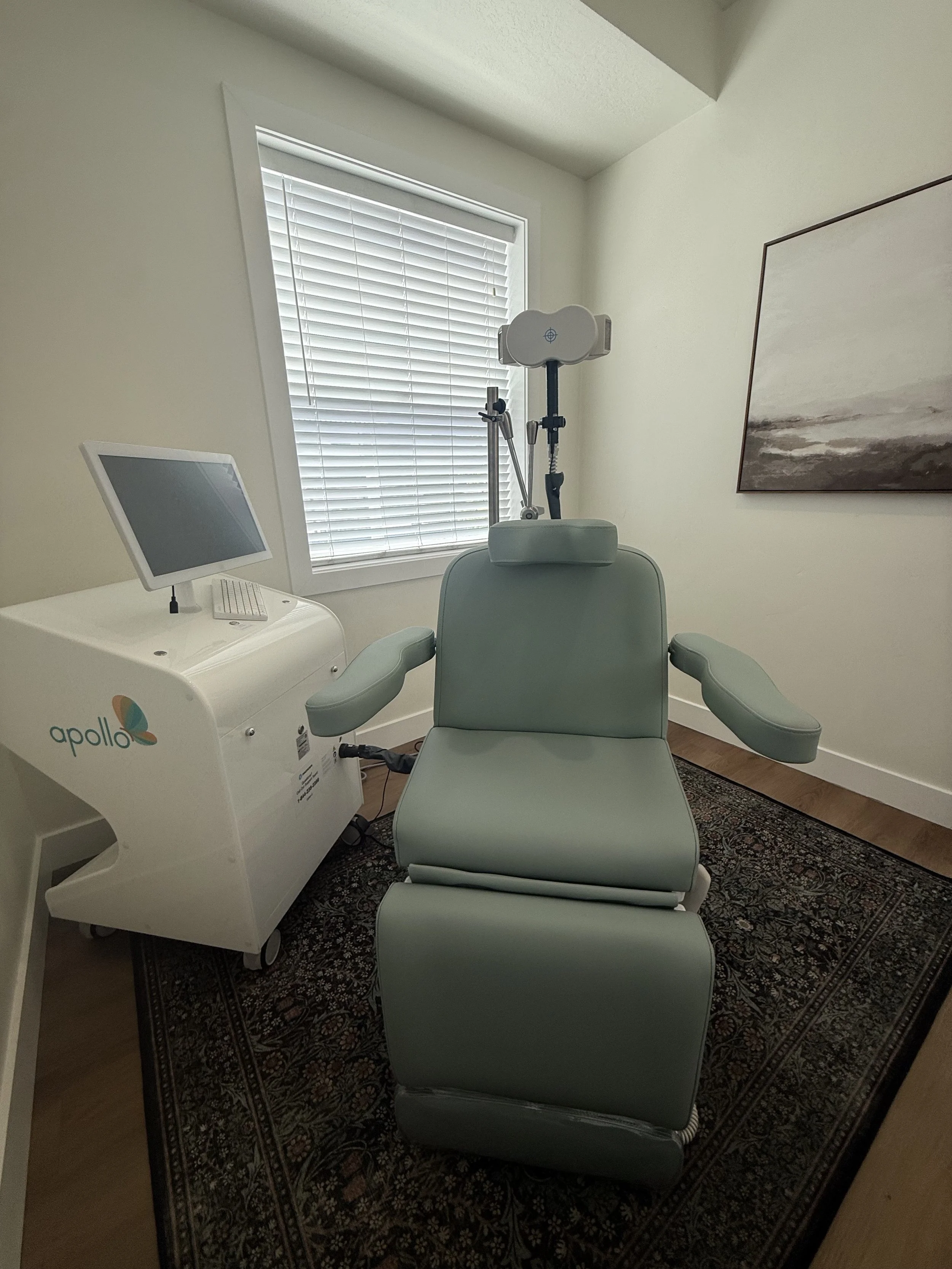
What is TMS?
Transcranial Magnetic Stimulation (TMS) is an FDA-cleared, non-invasive treatment for depression and other mental health conditions. TMS uses targeted magnetic pulses to stimulate areas of the brain involved in mood regulation—without the need for medication or sedation.
At our clinic, We use the Apollo TMS system, which allows for advanced, evidence-based treatment protocols such as intermittent Theta Burst Stimulation (iTBS).
iTBS delivers treatment in a shorter amount of time while maintaining effectiveness comparable to traditional TMS. This means many patients can complete sessions in just a few minutes, making treatment more convenient without sacrificing results.
TMS is especially helpful for individuals who haven’t found sufficient relief with medications or who prefer a non-medication approach.
Who is a good candidate for TMS?
TMS may be a good option if you:
Have depression that hasn’t improved enough with medications
Have difficulty tolerating medication side effects
Prefer a non-medication treatment approach
A consultation with our team can help determine if TMS is right for you.
FAQs
-
Transcranial Magnetic Stimulation (TMS) is a non-invasive treatment that uses targeted magnetic pulses to stimulate areas of the brain involved in mood regulation. Over time, this can help improve symptoms of depression and other conditions.
-
TMS is FDA-cleared for depression and is commonly used for patients who haven’t had enough improvement with medications. In some cases, it may also be used off-label for anxiety, OCD, and other conditions.
-
Most patients tolerate TMS very well. You may feel a tapping sensation on the scalp during treatment. Some people experience mild discomfort or headache early on, but this usually improves within the first week.
-
Most treatments take about 3–20 minutes, depending on the protocol used. You’ll be seated comfortably and awake the entire time.
-
A typical course of TMS involves 5 sessions per week for 4–6 weeks, followed by a taper phase. Your exact treatment plan will be personalized based on your needs and response.
-
No. TMS does not require anesthesia or sedation, so you can drive yourself to and from treatment and return to normal activities right away.
-
The most common side effects are mild scalp discomfort or headache. Serious side effects are rare. We will review all risks and safety considerations with you before starting treatment.
-
Many insurance plans cover TMS for depression when certain criteria are met (such as prior medication trials). We can help verify your benefits and guide you through the process. Self-pay options are also available.